
#169 Detached Attachment with Dr. Yolanda Bogaert
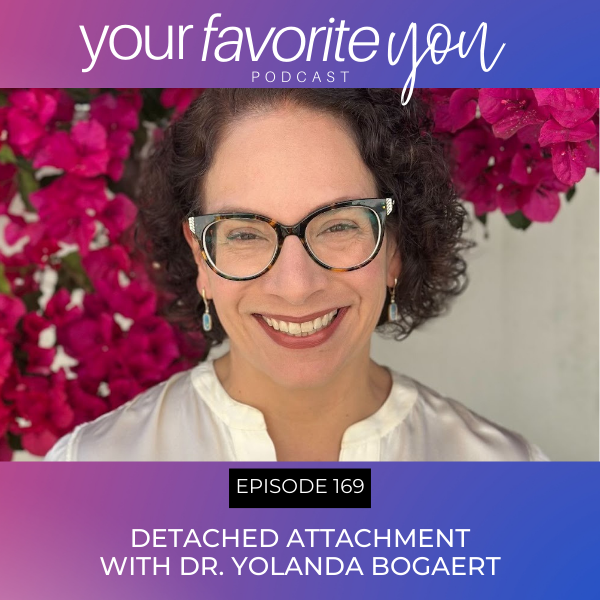
In this episode, I’m joined by Dr. Yolanda Bogaert, a physician and coach I met at the Physician Coaching Summit. Yolanda shares her journey through academic medicine, burnout, and an MS diagnosis, and how being a mom to a neurodivergent child has reshaped her understanding of identity and what it means to show up as your authentic self.
We explore Yolanda’s philosophy of “detached attachment,” a way of parenting and healing rooted in letting go of outcomes and focusing on emotional co-regulation and safety. You’ll hear how she learned to support her autistic son from a place of compassion and how doing her own emotional work created the foundation for his growth and her own.
Yolanda Bogaert, a clinical kidney doctor for over 20 years, was the Dr. Mom who tried to fix everything - until active multiple sclerosis and the complexities of raising her autistic son called her to redefine what strength and connection look like. She transformed her life using an intuitive wellness approach, and the detached-attachment model was born along with a blueprint to living your life fully without burnout. Today, she helps medical and professional moms move from overwhelm and guilt to clarity, energy, and a sustainable, shame-free self-love. A life that honors you, not just the roles you’ve had to carry.
Since you’re ready to become your favorite version of you, book a consult to learn more about working with me as your coach.
"I know I'm in my favorite space for being me when I feel it authentically, and I feel so relaxed. It's almost as if I'm shedding all the different layers of the role playing that I put on, and I'm just being completely and incredibly present as my favorite me.” - Yolanda Bogaert
What you'll learn in this episode:
What “detached attachment” looks like in everyday parenting and relationships
Why detaching from what you can’t control creates more room for connection
How your identity shifts when you move your focus from performing to presence
How emotional co-regulation and doing your own inner work support your child’s growth
"Without the sadness and the despair, you would have never gotten to where you are in terms of coming up with your own methods for helping him, for letting him be who he was, for teaching him that it was safe to stretch in the yellow zone.” - Melissa Parsons
Mentioned in this episode:
Be sure to sign up for a consult to see if coaching with me is the right fit for you. Join me on a powerful journey to become your favorite you.
Listen to the full episode:
Read the full episode transcript
Hey, this is Melissa Parsons, and you are listening to the Your Favorite You Podcast. I'm a certified life coach with an advanced certification in deep dive coaching. The purpose of this podcast is to help brilliant women like you with beautiful brains create the life you've been dreaming of with intentions. My goal is to help you find your favorite version of you by teaching you how to treat yourself as your own best friend.
If this sounds incredible to you and you want practical tips on changing up how you treat yourself, then you're in the right place. Just so you know, I'm a huge fan of using all of the words available to me in the English language, so please proceed with caution if young ears are around.
Melissa Parsons
Hello, everybody, and welcome back to Your Favorite You. We are so lucky because we are joined by one of my new favorite physician coaches. Her name is Yolanda Bogaert. She is also a physician and a coach, and we first met poolside at the physician coaching summit last week in Arizona, and I don't know about you, but I'm back to wearing my sweaters and long pants and that type of thing, so I'm missing that Arizona sunshine. Yolanda gave a talk on the last day of the summit that was just fabulous, and I wanted all of my listeners to have the benefit from hearing from your incredible wisdom. So, but before we get into all of that, I'm going to ask you to introduce yourself, Yolanda, and tell us about your favorite version of you.
Yolanda Bogaert
Oh, wow, that's a hard question. I think it's really, it's hard to answer that because I feel that it's consistently evolving, and I don't like to sit there kind of in one space. I know when I'm always in my favorite space for being me, when I feel it authentically, and I feel so relaxed. It's almost as if like I'm shedding all the different layers of the role playing that I put on, and I'm just being completely and incredibly present is what is my favorite me. And what I love about no longer having to play any roles except for the roles I want to, I have this whole thing of my identities, and it's about being able to go into a closet and to put on whatever identity I want to be. And the nice thing about that, right, so I have a mom identity, I have my white coat, which is my professional physician identity, I have an inner garden apron for like the three times a year, I bake cakes, you have to be very well loved by me to bake cakes. So basically my child and occasionally my husband. So I put I have that apron, it's there. And what I love about that is, no matter what identity I play with, that I get to be, I always know who I am underneath. And I think that sometimes as mothers especially, but even all women across the board, we are so used to playing these different roles, that we forget a that we can take them off and be that they don't find us at all. And so for me, my authentic self is a funny person. I am very kind. I'm that badass bitch that will have your back no matter what. And that means sometimes calling you out when you deserve to be called out and giving you a hug all the time. Just, you know, someone who believes that life is never fair, but it's always beautiful. And that, you know, hope is something to cherish and to, and to move with. Um, and that joy and love are free and should be freely given. I know that's a little bit of who my athletics.
Melissa Parsons
Yeah. I love it. And I love how you said it was going to be hard to answer. And then you were like, you just answered it was so beautiful.
Yolanda Bogaert
Um, you know, Puerto Rican, Dominican. So, you know, I had to pause and just, you know, then illustrate for like 30 minutes.
Melissa Parsons
No, I love it, I love it. Okay, so let's back up a little bit. And can you tell me kind of what drew you to specialize in coaching medical mamas with kiddos on the autism spectrum?
Yolanda Bogaert
Yeah, so just a little bit of my life journey. I was born in New York City last stop on the A train to very perfectionistic and demanding and refers generation. So with all the expectations that we moved to Maryland, I went to med school, I couldn't figure out if I was going to be a scientist or a doctor. So I decided to just do both. So I did a combined MD PhD at George Washington. Did that in six years. So I did a full load of graduate and medical classes at the same time and then worked in the lab at night, was burned out after six years and decided that I was just going to go to a place for good bread and butter medicine for internal medicine, regroup and then end up in Boston. So went to University of Colorado for my residency. I met my husband who was like, I never living in Boston again. And so you know how men basically ruin everything. So, you know, I said, Okay, fine. But after fellowship, and that's when I became a nephrologist, instead of the neurologist, I should have been, but I'm a nephrologist because I loved what I felt like with it was the exactitude of that science that you could take a look at the labs, you could take a look at the urine, and you could know what was going on. And if worse came to worse, and you did a biopsy, but then you always had the answer. And I really loved that. And I love ICU medicine almost became a pulmonary crit care, but it felt to amorphous to me about like you got this high res CT, and you weren't sure what was going on with the patient. And there was always a little bit of confusion and you biopsy them and you still weren't sure. And I really liked the fact that I knew exactly what was going on. So if there's a little bit of this, this undertow of perfectionist control freak, yes, highly, highly magnified. So I became a nephrologist, we stayed there, academic medicine, and I did not agree, especially after having a child, it was the very classic, you can't be a mom, and an academic doctor. And I said, well, I certainly can't be if my mentors are telling me that. Absolutely right. And so, you know, so I left academic medicine went into private practice. And by then, I had had my child, my second child, so my daughter was five, my, my, no, my daughter was like four, my son was like one. I mean, again, having all these weird worsening like nerves and tingles from the stress, I was diagnosed actually with multiple sclerosis. And I was at a point where I couldn't even walk very well. So I was like, so that's when I was like academic medicine and the stress of that, that perfectionist, that trying to control everything that wasn't working. So I went into private practice a year later.
Melissa Parsons
Can I pause you for just a second? Yeah. Like the ability to recognize that and to admit it to yourself after you've done all of that training. Like that is so badass, Yolanda. Because a lot of people I think would be like, I am so far down this road. I've done all these things. I've got my MD, PhD, academia is where it's at. And they wouldn't have listened to their bodies and they would have just kept going and to your peril.
Yolanda Bogaert
I thank you for that. It's still hard for me to sometimes see that. And I think if I'd had the classic retrospective scope, there were so many times. But the one thing that happened was almost emergently where I couldn't walk. And so I thought I had CIDP, which is a demyelinating illness that starts from the bottom to the top. I had seen people that had gone through this and within 24 hours, you're on a breathing machine. The risk for death is extremely high. I knew those patients because they would call us in as kidney doctors to do something called plasmapheresis to help take away these antibodies who are attacking the patient's brain. And so I thought I was going to be 24 hours, like in a life threatening condition, I was going to die. Instead, I saw an MRI of my brain with 40 lesions, lit up like a Christmas tree. And all of a sudden, the illumination that I saw on the screen in front of me, literally hit my brain, like this job was killing me. And I had a choice. And it was a loss. It was like a horrible divorce because it was the loss of this dream. For many years, I would tease people, they would say, you know, what kind of doctor are you? Well, I would say, well, I'm not really here. I'm actually the head of neurology at Columbia University. Because that was my dream. That's what I had been groomed for. That's what I worked my butt off for. And and it was it was not easy and I felt like a big failure with a capital F for so many years, and it's something that I definitely had to work through. It caused me depression. It caused me to kind of spiral, but that's where children can be a lifesaver because every day I would wake up and say I have a choice. I have a choice to be this woman who is sad and despondent and in failure or I have two little ones that I brought into this world that I decided to bring into this world. And I have this choice to work through that, to navigate through that pain, and at the same time, experience joy with them. And I wanna bring this up as a really big topic, and this is almost its own separate podcast, because I think it's so important for us to talk about when we choose kind of these identities, when we choose how we're going to be in the morning, a lot of times we choose to mask. We don't choose to process and to let ourselves kind of go through the pain. And I love that word, right, to be seen, because part of being your authentic self is having not only everyone around you but yourself acknowledge the good, the bad, the ugly. And I have a fourth one, which is the autistic temper tantrum, so if you have the good, the bad, the ugly, you have the autistic temper tantrum. And that's one of the things I learned about with Miguel within my journey with my son. But was that he was always authentically his self. And it was a real beautiful mirror to me of without even knowing it, there's not any other way they know how to be than to be their authentic self. And so it taught me that lot. So anyway, just to circle back, I left academic medicine. I was working through the scorn and the scarlet pee of private practice. of that. And we had it where Miguel all of a sudden started to disappear. He was at 18 months, this very almost comically like verbose and astute. He would come into daycare and we'd like, I have to save the day. He would come at the dinner table and I have this in my book, Daddy, this meatloaf is delectable. And he would use these huge words and phrases. He had such a great memory that I actually thought he was reading at 18 months. And then I realized he just said memorized every single book to every single page that could just flip it open. And so we went from that where I was just like, yeah, I'm the boss. Like, you know, I may be in private practice and not academic medicine, but I have a child that's a genius to, oh no, it's not a genius when he started to pull away from us to not allow us to touch him. I remember the time where I couldn't give him a hug because he just pulled away like I was burning him. And he stopped talking. And it was very clear to me that there was something going on. And then he was diagnosed with autism. And I was like, Oh, he's not a genius. He just says autism. And all of a sudden I went from this, you know, proud peacock mom, who as a physician mom, you know, it was very, I felt I failed in so many different aspects of my life, although my resume looked great. I personally have failed, but I was like, okay, I have two kids that are the bomb. And then all of a sudden this happened. And my definition of who I was and my identity as a mom back then kind of fell apart. And so I felt that I had failed at the two main things in my life. One was my career and now my children.
Melissa Parsons
Yolanda, you just said that you were thinking that Miguel as a baby was so smart and you had this brilliant baby. And then you realized that, oh no, it's just that he's artistic. And I have talked to you and I know that this is not how you think about him. So do you want to clarify what you said?
Yolanda Bogaert
Yeah, I mean, it sounds really awful, but I'm going to tell you that that's where I was when he was diagnosed. I was in such a state of fear. I didn't understand much about autism. To me, autism was rain man. And he had gone from being so precocious and I had already this trajectory mapped out for him for his whole life.
Melissa Parsons
Oh yeah, Ivy League, baby, here he comes. Rhodes Scholar.
Yolanda Bogaert
I hadn't been able to save the world, but that's okay because I brought children into this world, that we're gonna save the world. So that was fine, right?
Melissa Parsons
Your contribution? Done.
Yolanda Bogaert
I said, they had my DNA, exactly. Those boxes were now checked. Thank God, okay. This is my why to bring these children that are so brilliant, both my daughter and my son in different ways, and they were gonna fulfill all the empty promises of left. I mean, you can only imagine to go from that to letting go outcome. That was a big frigging stretch. So that's part of what happens when you are in that fear state is that things become very black and white. And small. Yeah, right. So no, it's not brilliant. He just says autism. And of course, then what I did, as Dr. Mom fixed it, was I researched and I researched and I researched. And at least I filled my fear with knowledge. And I was like, okay, there is so much more autism first of all, in this world. There's all these brilliant people that are clearly neurodivergent, that are clearly autistic. I was like, hello, Einstein, hello, hello, right? You don't learn about that. There's a side note, we didn't speak till he was five. We really, when you go into his history, they were gonna institutionalize him and his mother said no. And here we go. So now of course, there is so much and this is part of my big why. I believe there are a whole set of children that because parents are not taught how to emotionally co-regulate with these children, that we are increasing their stress response, that we are increasing their flight fright freeze. And Melissa, I don't know the last time that you were in a panic state on like 100th floor building at the edge that somebody wanted to present calculus to you that you were able to do.
Melissa Parsons
Well, you just said a kryptonite word to me, which is calculus. So that would have been the first of never, but yeah.
Yolanda Bogaert
Right, so that's what we're expecting our children to do. And my huge belief is that when we are able to process all this fear, right? To go from my child is a genius to all of a sudden, like, I may have to be feeding him or changing diapers for him, or he may never go to college. You know, that when we go from that black or white to instead of, okay, let's fill ourselves with knowledge, let's emotionally then we can take our kids from this flight freight free state from this sort of adrenaline state, have them in a state that they're secure and safe. And then they begin to unwind and to blossom into really the fullness of what they can be.
Melissa Parsons
I love it. I love that explanation. And I'm so glad that I stopped you and had to explain it even more beautifully. So thank you so much.
Yolanda Bogaert
Oh, yeah. I'm glad you did too, because I would come out not great. And so in working through that, the one thing I knew that I had said from the very beginning before I had my children, because I had been raised in a state of a lot of shame, shame was like, basically, you know, more than like the wooden spoon, shame was the way that you were raised as a first generation, Puerto Rican, Dominican woman, you were shamed for everything. And I said, I'm never going to raise my kids with shame. Never. I'm going to always make them feel like they're enough, even if I can't feel like I'm enough. And so that is the approach that I picked with Miguel. And the approach I picked with him was I'm not, I don't know, I'm not sure of what the end is going to be. But what I do know is that I love him more than life itself. I do believe, right, that, and this is highly controversial. So I'm going to let you figure out if you want to edit it or not, but I'm going to say it because this is like, this is like three tenants. I said to myself, and this is after reading Temple Grayden's book with the author of her first book that has so much about her mom, right? This badass mom who did not take anyone's, all the experts' words of institutionalizing Temple, right? She was like, no, I believe my child is intelligent. Like I believe my child can do more. And so I looked at that and I said, okay, if this woman could have faith without being a doctor with a child throwing feces, like I was like, okay, Miguel, at least he may, I may be in an S storm with him, but at least he's not actually throwing S, right? Like he's like, right, at least it's like, you know, at least it's, you know, it's contained. And I said, okay, right. So it kind of was almost like someone slapped me when I read her autobiography. I was like, okay, I got it. And I had these three tenants that would whisper to myself, like my son is, I believe my son is at least as smart as a dog. I believe that if dogs can be trained, I can train my son. And I believe that if we could take someone who's anaphylactic to penicillin and to bee stings and desensitize that there is no reason why I can't cause like the same tolerance for socialization for Miguel. All right, so back then was no ABA. So I decided to design my own. And it's different than the ABA that is now. Basically, I decided to do it like on a Montessori play based, doing a lot of role playing, doing a lot of desensitization, like you do for people that have phobias. Because what I saw, what I witnessed with Miguel was that he would go into like a fight, flight, freeze state, whenever he was an overwhelm. And my hypothesis was that the difference, the reason why so many kids with autism get diagnosed around that two-ish is that the rods and cones and the eyes expand huge so you go from this, this span of basically your arm length, where that you have visual acuity, to all of a sudden, it's the world. And it's overwhelming, right? That's when your kid at two is like, what's this? What's this? What's this? And you're like, Oh, my god, we're make it stop. For an autistic kid, it's what's this? What's this? And it's everything. And because they have less neural connections to their prefrontal cortex, which is the inhibitory form, it becomes, and more connections to their midbrain and their amygdala, which is emotional. So I took my neuroscience background, went into all the neuroanatomy, looked at the differences they had seen. And I was like, okay, this is what's going on. Like Miguel is in fight, flight, and freeze. And how much learning are you going to do if you're in fight, flight, or freeze? Like none, zero, right? Anything that you're doing is just going to spiral. So in my head, I was like, I had that. And then I had like this green, yellow, red zone. And so I paid attention to his physical behavior as a subtle manifestations of what was going on with his brain. And I looked and saw the early signs of him, like early signs of him stimming. And I was like, okay, that's soothing. So I never shamed it. Back then, 2005, people were trying to get kids with autism to stop stimming. I was like, right. I was like, heck no. That's his security blanket. He's not hurting anyone. My mother would be like, can't you get him to stop flapping? And it was really hard for me to not say what I wanted to say, but I did. I just said no. All he's doing is soothing. And why should I shame him about his soothing behavior? And I said, and you're not gonna shame him about his soothing behavior either, right? He needs to do this and it is A-okay. I said, what we will be doing gradually, which is what we did is we helped him when he was in the green zone. So that's the other thing. Like if you're in the green zone, not just your artistic kid, but your neurotypical kid or yourself, when you're in the green zone, it's easy to stretch. Where you learn though, and this is the important thing, where you learn and where you integrate that stretching and where it changes you is when you're in that uncomfortable part of the yellow zone. So if you really want to change yourself, you've got to get yourself to that little part of that yellow zone where it's a little bit uncomfortable, it's a little bit stressful because then your brain will remember this as something that's important to remember. So I would take Miguel into that yellow zone and I would watch and see where he is. And then when I saw like, okay, we got more hand flapping, there's a little bit that's orange and we stopped and we have to escalate and back off, right? Because once you're in the red zone, it's just safety. It's just, it's like, okay, right, exactly. It's like, don't run out in the street. If you're hitting somebody, then we have to hold your hands and stuff. I never let my son actually hit his head with anything. I would catch his head and I would say no because I understood that traumatic brain injury can occur in children at a very early age. What is the sign, what happens to traumatic brain injury? You get less, you get prefrontal injury, right? And I was like, less in addition. Like my child doesn't need any less in addition than he already has, right? So to me, safety was there were certain behaviors I was not going to allow because they were harmful behaviors. And so that was one of them to me was they had, and guess what? Within a few months of doing that, he learned, right? Just like because he was smarter than a dog, he learned like he wasn't gonna be allowed to do that. And so he stimmed or when he went into red zone, it was different. So it was running and I gained a lot of miles on my legs.
Melissa Parsons
I believe you, I believe you.
Yolanda Bogaert
So all of this really came to this philosophy that I had of detached attachment. And into that, what was the most important without philosophy was that it also taught me a lot more about being a physician. And it actually helped me get through burnout and helped me practice for, I was, 1998, I became a doctor and I just retired last year. In order to do this, yeah, in order to do this, to be able to coach moms, especially moms that are healthcare providers, also moms that are professionals that have children with autism. And the kind of takeaways about detached attachment is a philosophy that you detach from everything that you can't control.
Melissa Parsons
Coming from a control freak, that's a hard thing to do.
Yolanda Bogaert
This is coming from a control freak who was raised from, from what I can even remember who was raised that outcome was important. It was raised that what happened to the other 5% when you brought home a 95. It was all about achievement. It was all about what's the next step. There was no relaxation. I said to someone, if I just describe what my process was before I learned all of this and literally transmutated, more the transform, like transmutated into the woman I was today, I would say a good description for me was that I'd be running and, you know, I would have won. I would have jumped onto the Olympic stage, grabbed my gold medal, put it on, waved, handed my gold medal off to somebody else and then ran off for the next Olympic competition.
Melissa Parsons
Yeah, like take about 0.2 seconds to celebrate the win.
Yolanda Bogaert
Right, the one photo shoot, right? And then I take it off because I'm already launching on to the next competition.
Melissa Parsons
You can be weighed down by this gold medal for God's sake.
Yolanda Bogaert
Oh heck no. Okay, I mean, that was like, like you said, you know, three microseconds ago, like, you know, I'm on to my next one. And so I, you know, for me, doing that was was a huge thing. However, it, I was able to do this because of my love for my son. Because when you have a child that's nonverbal, when you have a child that's really struggling to be with anybody socially, when you have a child that is in such a state of fear and panic, what I understood was that if I was focusing on the outcome, it would cause Miguel to actually escalate more.
Melissa Parsons
Yeah, well, and so much pain.
Yolanda Bogaert
Right. And our kids, when they feel that we want something for them that they can't achieve just yet, or that they're not enough. Um, or anyone, right? Our patients, our co-chees, when they feel that they're not enough, we're not holding that space for them, it's impossible for them to stretch. It's impossible for them to get into that yellow zone where they can make their own magic. And so instead, what you have to attach to is your own unconditional love, your own understanding of your own education and your training and your caring and your compassion. And when you do that, when you're in your own space of that, of being enough and knowing that, that your presence is enough, then you can be with that other person in their presence. And even if they're not in that space where they feel that they're enough, they can feel from you that you know they're enough.
Melissa Parsons
Mm-hmm, so beautiful.
Yolanda Bogaert
And Miguel really felt that. And so he felt safe with me stretching. He understood that I would let him take agency and move the needle, but I could hold it for him. And that I knew that miracles could happen. And I could teach him that he could expect that he could do so much more than what he thought. And so it is a fine balance. It is a fine balance because I think a lot of times physicians and moms struggle with this. Well, I don't want to just accept like a patient has an A1C of 14, right? Or you don't care about the outcome. You don't care about the patient. Or how can you be like, I see what you did with Miguel, but how could you say that you didn't care about the fact that he wasn't, that he was reading at a below two-year-old grade, two-year-old level when he was like eight? How could you say that and still really, really care? And my response is because he was always enough where he was, and at the same time, I knew that he was always capable of so much more. So you can hold that space for the incident possibilities, but not shame someone where they are right then and there.
Melissa Parsons
Yeah, I was just going to add, and you may not agree with this, but when you take all the external achievement kind of off the table, and you're not having that be your guiding light in your North Star, and you're thinking instead, I want to create connection with this person. I want them to feel at least when I'm around that they are safe, like how much more important that is in this situation than bumping up his reading level?
Yolanda Bogaert
No, I think the magic for so much of what we do when we're healers, and I think that it obviously includes being a coach, because I feel like one part of my authentic identity is a healer. I feel like I'm actually was born as a healer. I actually feel that I can hang up my mom identity, but I could never hang up my healing identity. And I think part of being a healer is giving that sense of security and that space of seeing someone as their authentic self. And seeing the beauty in that. You know, one of the things my father used to travel all over the world, and one of the things that remember he brought home was a picture of a geisha, like a painting that was a very, very old geisha. And it's a very famous kind of painting, but, you know, the geisha's wrinkled and haggard. And I was eight, and he said, isn't it beautiful? And I was like, no, not really. Because all I could see was outcome. All I could see was the outside. And then later on, I realized that what the Japanese worshiped was the beautiful light within and that they saw these geisha women as truly more beautiful when they were aged than when they were young and pretty. Because they saw the beauty of this wisdom around them and how much like it illuminated them. And I think that is so much of the magic that Miguel taught me. That I could learn to see him with a good, bad, ugly and autistic temper tantrum as so much beauty. And all of a sudden I started seeing patients and other people in that same way. I could hold that space for them when they were in really self-destructive behaviors. Because I could say, okay, this is where they are. And I could see this is where their journey took them. And I all of a sudden had this appreciation for the layers and for the beauty that there is sometimes that we don't want to in the Western world. For the learning that anguish and sorrow and the pain and where it's taken them and just acknowledging that humanity in them.
Melissa Parsons
Well, yeah. And the idea that we could never know what is best for another person. Only they know. And sometimes we see people going down a path where we're like, no, don't do it. And it's like, no, it's like none of my business. Which is hard. I think when you're a physician, when you've been taught that everybody's business that you're taking care of is your business. It's on you to make sure that they're healthy and that they stay alive. And all these other things that we expect physicians to be able to do for people.
Yolanda Bogaert
And I think when you hold this space to say for them, it's okay that you're here. I really don't know how or why your journey got you here. But I can appreciate you for being here. And let's have a conversation of what does that mean for you?
Melissa Parsons
Yeah.
Yolanda Bogaert
What is your why? What is it that holds you value? What is it that holds you trapped here? Really, what is it that you're feeling and acknowledging where you want to go? Because that's when you flesh out and you see the wholeness of the person. And, you know, and then asking them, like, you know, what is your one big why? What is the one thing that connects you to staying here, to being that? Sometimes you'd be surprised at kind of what the answer is. And then that's that connection where you can build upon it.
Melissa Parsons
Yeah, we can work with that.
Yolanda Bogaert
Yeah. Right, right. And I think for so much of us, when we're just so focused on the outcome, and we're so focused on getting to a place, instead of stopping and thinking, okay, we don't control outcome, even for ourselves.
Melissa Parsons
Yeah, that's a tough one.
Yolanda Bogaert
It's a really huge tough one. Right. We can make decisions that help kind of guide us there. But really, the only thing that we're in control of, the only thing is what our own responses are. And I think a lot of what we give control, what we lose control over, in terms of the things that we can control, is if we're not taking agency over processing our emotions, if we're not taking agency over sitting with them. And understanding the trauma of we're not taking agency over healing ourselves, then we give away so much of our own control. And we give away so much of our life, because then we attach to things that we shouldn't be attaching to, like having the next big career position. Or, you know, what does my car or my house look like? Or, what are my kids doing?
Melissa Parsons
Yeah, where are they going to college or whatever.
Yolanda Bogaert
Yeah. And, you know, and instead, you know, sitting there and kind of processing these emotions as they come up. And saying, okay, you know, I can control my response. So for example, with Miguel, when I said, you know, I don't know what his future looks like. And I can control today my feelings of sadness and grief. Like I can sit with that and say, I'm sad of him struggling. And I feel ashamed. I can say that. I feel ashamed as a mom, as a doctor mom, that I'm not fixing him. I can feel ashamed that I don't know the answer. Right. And I can sit with that and say, okay, it's, the shame is really, is really grieved. And it is, I have every right to be sad and it's okay that I'm sad. This is a hard journey for my son and it's a hard journey. There's a lot that I had dreamt about that I lost. There's so much more that I gained, but I couldn't see it then. And it was okay that I couldn't see it then. It was okay that I was in sadness and despair and I could say that. Thank you. Thank you, sadness. Right. This is, it is hard to lose this dream of having a son and not doing X, Y, and Z with him. That's hard. Okay. What can I do instead? How can I show up instead.
Melissa Parsons
Without the sadness and the despair, you would have never gotten to where you are in terms of coming up with your own methods for helping him, for letting him be who he was, for teaching him that it was safe to stretch in the yellow zone. And that when I go to the red zone, mom's going to be right there to keep me safe. Like all these things you would have never figured out without that despair and that sadness.
Yolanda Bogaert
Right. Because when we don't process these emotions and we're not able to emotionally co-regulate, instead of living in the present and having your presence, all we're doing is we're either living in the future and in the fear of what won't be, or we're living in the past and in the despair and sadness of what was. Instead of being right here, like fully present, and the magic of like, I get to be here with Miguel, like, for whatever reason, he chose me as his mom. Like, you know, God chose me to be his mom.
Melissa Parsons
Yeah, he lucked out, Yolanda. I'll say that.
Yolanda Bogaert
I don't think he would say that. But thank you for saying that.
Melissa Parsons
I'll say it for him.
Yolanda Bogaert
He's become so neurotypical that that for sure is not something he would say. He would have actually said that more when he when he was less neurotypical, he would have been like, you're a really good mom. Like, he would be mad at me. He would write, I really don't like you. And I don't like what you're doing. And I hate this. And I hate that. But I know that you're a great mom and you're doing it because you care about me. But now that he's neurotypical, he'd be like, you just suck.
Melissa Parsons
Oh my gosh, that's amazing, that's amazing. For our listeners, you kind of gave an example, but what does detachment look like in practice? Just so the mamas can kind of hear it and see it maybe.
Yolanda Bogaert
Yeah, so an example, for example, one, I remember that when he was little and he got very, very upset with something and he had been kind of in the red zone and I remember he was hitting me and it hurt. And so I kept holding his arms and saying, no hitting, no hitting. And in fact, I gave this as an example because I worked through very quickly. The more and more that you do this, I just want to let the listeners know is that this is an emotional muscle that you can really build. So it seems like a lot of work to go through and process. But once you get used to naming the emotions that come up, sort of like dialing down and saying, okay, why is this emotion coming up? What is it telling me? And then thanking it. It's so important to always think your emotions no matter what they are, especially the ugly ones. As I told my daughter, because she has sometimes issues with anxiety and also just can get very angry. She can go from like zero to 100 and like that. And she would feel a shame about that, the shame that she couldn't control anger. And I said, never shame your shame. Like if you want to basically stuff your shame down and give it a lot of shame, then it's going to come out in a big ugly way. So especially when it's an ugly emotion, like thank you shame for coming and telling me that I'm not a good mom. Like that's really hard. Because I try and I worry that I'm not doing what I'm supposed to be doing, and that I should know this and I should know that. Thank you for telling me that. Is it true? Is it true? And if it is, that's another thing, but most of the time it's not. Most of the time it's not like, no, I don't have all the answers. And I know I don't have all the answers and I'm doing everything I can to try. And yeah, we can always do better, but I thank you shame for showing up and letting me know this is what I'm feeling because if you don't recognize that, then any person that you're dealing with, especially when it's your child will feel the shame that you feel for yourself and feel it that it's towards them. So it's really important for you to say thank you. Like, like, you know what? Big hug, big hug to the little ones inside of me that are feeling this. Like your mommy's got you. I always tell myself that your mommy's got you like mommy's here. Later on, I'll revisit you. We'll think about you more. I'm not going to abandon you. We'll set you aside, right? But right here, right now, I'm choosing to be the mom that my son needs, right? And so, you know, one of the things like when he was hitting me was that shame that I hadn't done enough, that some of the anger that initially felt like I was just he's hitting me. No, most of that anger was anger at myself and shame at myself that I hadn't been a good enough mom to have gotten him over this. And once I connected with that, that my anger dissipated because I named it, I called it, I thanked it for being there, right? Because so much of that is fear, like fear that I'm not enough as a mom, fear that I'm never going to be enough as a mom. And that's okay. It's okay to have that. There's nothing wrong with that. Being a mom is tough.
Melissa Parsons
Yeah, it makes sense. It's really hard.
Yolanda Bogaert
You know, if you don't have a little fear as a mom, then you are either a goddess, which that's great. And then you don't need to be listening. Sorry, Melissa, but you don't need to be listening. That's a goddess mom. Or, you know, or maybe there's a lot of masks that you have on. Like maybe think about it instead of, there's a lot of protection and that's okay. That's okay. But to really, that just means that's a lot of work to get into that space.
Melissa Parsons
Once you realize that it becomes your responsibility to figure it out.
Yolanda Bogaert
And so in doing that, in naming all these things and sitting with this and being like, okay, this is my emotions that I'm feeling now is yeah, some of it is that it hurts, but most of it is that it's about me. And is it really about me? No, it's my son is in the red zone. We're going to just go to safety. I'm going to breathe out, not being enough. We're going to get through this and we're going to, I'm going to sit there, look at the things that triggered him. Think about how I'm going to work with him about those triggers when he's back in the green zone and we'll start this and it's another time. And so the last thing I want to leave you with, because this is the last thing that's part of, I call it the fall of my own journey is that what's attached to attachment when you start this as a life philosophy, when you let go of outcome and everything you can't control, right? When you let go of all of that and instead focus on the agency of what you can control, which is yourself. And for those moms who think that that isn't going to be enough, uh-uh, no.
Melissa Parsons
We're here to tell you different people.
Yolanda Bogaert
I'm sorry, but learning this, doing this, working on myself. This is how I took my son. It was like basically nonverbal to graduating from college and more importantly, being like such an empathic kind of human being that my mom and my mom just turned 85, my sister picked up my son and had an hour and a half like drive with him and she's like, he's such a great conversationalist and you know what, he was so like attentive to Mamita. That's my mom, so attentive to Mamita that he was like a role model for Mike's sons, right? My 19 year old autistic son, it was a role model for a 16 year old cousins on how to treat an older person, the attentive and be that, right? So, so it is all about once you take agency over yourself, over your emotions and focus and do that hard inner work. And that's why I loved your episode 143. I love that one, loving yourself, everyone here, like, please listen to this and then go back to episode 143 and 141 is not too late. It's never too late, no matter where you are, because once you do that and do that hard inner work and heal yourself, then you're presenting yourself as a healed, fully, you know, actualized person in your authentic self to the world and that safety and security that you have when you are with people, when you are with your loved ones enables them to relax and to be their authentic self and to just expand and miracles happen. So, and that's to me, that's, that's grace and mercy.
Melissa Parsons
Yeah, so beautiful. I would say, you know, I like to think that we're never healed. Like, you know, there's always some work to be done and that type of thing. And I definitely hear what you're saying in terms of being an example of that. Like as a pediatrician, I would always tell people, you know, the way to teach your kids how you want them to be in the world is to be that in the world and, you know, lead by example. So I love that it's coming back around to some of the pediatric, you know, principles that I taught my mamas of neurotypical and typical kiddos. Like, you know, it's so beautiful.
Yolanda Bogaert
I want to, just for people who don't believe, I want you to think about the last time that you were nervous about seeing somebody and how from across the room, the way they walked in. either made you feel great or made you feel terrible. And so if you don't believe that how you controlling or attaching to what you can control your own self, your emotional regulation. Especially for our kids, because the younger that they are and the more midbrain that they are, the more emotional savant they are. And our neurodivergent kids are affected empaths, like they are reading everything. So just think about that from across the room, right? Someone's coming off an airplane, and you can already read their emotion towards you. So how much more your child that is interacting with you feels that and feels your emotions and feels how you feel about yourself. They are reading and they are learning how to think about themselves and to feel about themselves from the way you feel about yourself.
Melissa Parsons
Yeah, that's amazing.
Yolanda Bogaert
And it's our job and our obligation. It really is. to work on ourselves because that is how we not only heal ourselves, but heal ourselves, but heal like any generational trauma. And we carry that forward.
Melissa Parsons
You briefly mentioned your book. Tell us about your book and when we can buy it and all the things.
Yolanda Bogaert
I just basically have finished it. I'm sending it off in January for query letters. So it's going to be some time, but it's called Dr. Mom, Autism Son. And I'm really excited. It's actually a memoir of my journey of being a mom to Miguel, but also to Sophia of my journey with my own mom, my journey through academia and being enough as a career. It's actually part one because sometimes I'm reading these chapters and thinking, oh, I want to put all these other lessons that I learned, but that's like book two. But that's kind of there for right now. I have a Facebook community group, Medical Moms with ASD Kids. You can reach me on Yolanda Bogaert MD, both on Instagram and through my website. I'd love to connect with any mother that has a child that is neurodivergent, especially with autism, and to really help through this coaching, which I believe a thousand percent made a huge difference in our family's lives and in my son's life too.
Melissa Parsons
Yeah. Same, same, same girl and the Parsons family too. So I love it. Thank you so much for coming on and sharing your beautiful brain with us and your journey with your family and yourself. And it was just a beautiful episode and I can't wait for it to go out into the world and help so many people.
Yolanda Bogaert
Thank you so much for having me, Melissa. I really appreciate it. And thank you for your podcast. I've really, really enjoyed listening to it and really enjoy listing to your voice. It's great.
Melissa Parsons
Oh, thank you. Thank you. I appreciate that. And I receive it for sure. All right, folks, come back next week and I'll have another fabulous episode for you.
Hey - It’s still me. Since you are listening to this podcast, you very likely have followed all the rules and ticked off all the boxes but you still feel like something's missing! If you're ready to learn the skills and gain the tools you need to tiptoe into putting yourself first and treating yourself as you would your own best friend, I'm here to support you. As a general life coach for women, I provide a safe space, compassionate guidance, and practical tools to help you navigate life's challenges as you start to get to know and embrace your authentic self.
When we work together, you begin to develop a deeper understanding of your thoughts, emotions, and behaviors. You learn effective communication strategies, boundary-setting techniques, and self-care practices that will help you cultivate a more loving and supportive relationship with yourself and others.
While, of course, I can't guarantee specific outcomes, as everyone's journey is brilliantly unique, what I can promise is my unwavering commitment to providing you with the skills, tools, support, and guidance you need to create lasting changes in your life. With humor and a ton of compassion, I'll be available to mentor you as you do the work to become a favorite version of yourself.
You're ready to invest in yourself and embark on this journey, so head over to melissaparsonscoaching.com, go to the work with me page, and book a consultation call. We can chat about all the support I can provide you with as we work together.
I am welcoming one-on-one coaching clients at this time, and, of course, I am also going to be offering the next round of group coaching soon.
Thanks for tuning in. Go be amazing!
Enjoying the Podcast?
Subscribe by clicking your favorite player below.


If you like what you're hearing so far please take a couple of minutes to leave a 5-star rating and review on Apple Podcasts by clicking here. You'll be my new favorite podcast listener. :)


Comments